Flying with Type 1 Diabetes: Everything I Wish I Knew Before My First Flight
The first time I flew after being diagnosed with Type 1 diabetes, I had about a thousand questions.
Can I bring insulin through TSA?
What about my pump?
Will airport security make me take everything off?
Can I bring juice?
What if my blood sugar goes low while we’re in the air?
If you’re feeling nervous about flying with Type 1 diabetes, I get it.
The good news is that after years of traveling with diabetes, I can tell you this:
It gets easier.
A little planning before your trip goes a long way toward making travel feel almost routine.
Here’s everything I wish someone had told me before my first flight.
My Number One Rule
Every diabetes supply goes in my carry-on.
Every.
Single.
One.
I never put insulin, pump supplies, CGM supplies, or low snacks in checked luggage.
Flights get delayed. We recently traveled to Ireland and the flight there was a disaster, while I listened to another passenger bet the flight attendant to get her bag from underneath the plane I reminded myself why I never even plane side check my luggage. When we finally arrived, our bags didn’t make it for 3 more days. That would have been three days without supplies in a foreign country-bad news, Betty!
Bags get lost.
Connections get missed.
I can buy a toothbrush almost anywhere.
Replacing insulin or pump supplies while you’re on vacation is much harder.
Pack More Than You Think You’ll Need
Travel has taught me one important lesson:
Things happen.
Pump sites fail.
CGM sensors peel off.
Flights get canceled.
Vacations get extended.
I always pack at least twice the diabetes supplies I expect to use.
I’d much rather bring extras home than spend my vacation searching for supplies.
Going Through TSA
This is probably the question I get asked most.
Airport security sees travelers with diabetes every day.
Before I get to the scanner, I let the TSA officer know that I’m wearing an insulin pump and a continuous glucose monitor.
Depending on the equipment being used and the manufacturer’s recommendations for your devices, the screening process may be different. If you’re unsure how your pump or CGM should be screened, check the manufacturer’s guidance before you travel and let the TSA officer know what you need.
I’ve found that staying calm and communicating clearly makes the process much easier.
Important: I wear the Medtronic MiniMed 780G. Always follow your own device manufacturer’s travel recommendations, as guidance differs between insulin pump and CGM brands.
Keep Low Snacks Within Reach
I never assume I’ll be able to buy food exactly when I need it.
Delays happen.
Weather happens.
Sometimes you’re sitting on the runway much longer than expected.
I always keep fast-acting carbohydrates where I can reach them without digging through my entire bag.
My favorites include:
- Nerds Gummy Clusters
- Fruit snacks
- Glucose tablets
- Clif Shot Bloks
Those stay with me—not in the overhead bin.
Wear Your Medical ID
It’s something I wear every day, but I especially make sure I have it on while traveling.
Hopefully no one ever needs to read it.
But if they do, it’s there.
Stay Hydrated
Flying can be dehydrating.
When I land, one of the first things I do is refill my water bottle.
Hydration matters for everyone, but I’ve noticed it also helps me feel better and makes blood sugar management a little easier after a long travel day.
Time Zones Can Change Things
If you’re traveling across multiple time zones, your meal schedule, sleep, and insulin routine may look different than they do at home.
I try not to expect perfect blood sugars on travel days.
Instead, I focus on staying flexible, checking my CGM more often, and making small adjustments as needed.
Give Yourself a Little Grace
Travel days are unpredictable.
You’re waking up early.
Walking through airports.
Eating at unusual times.
Maybe you’re excited.
Maybe you’re stressed.
All of those things can affect blood sugar.
If your numbers aren’t perfect, it doesn’t mean you’re doing anything wrong.
It means you’re traveling.
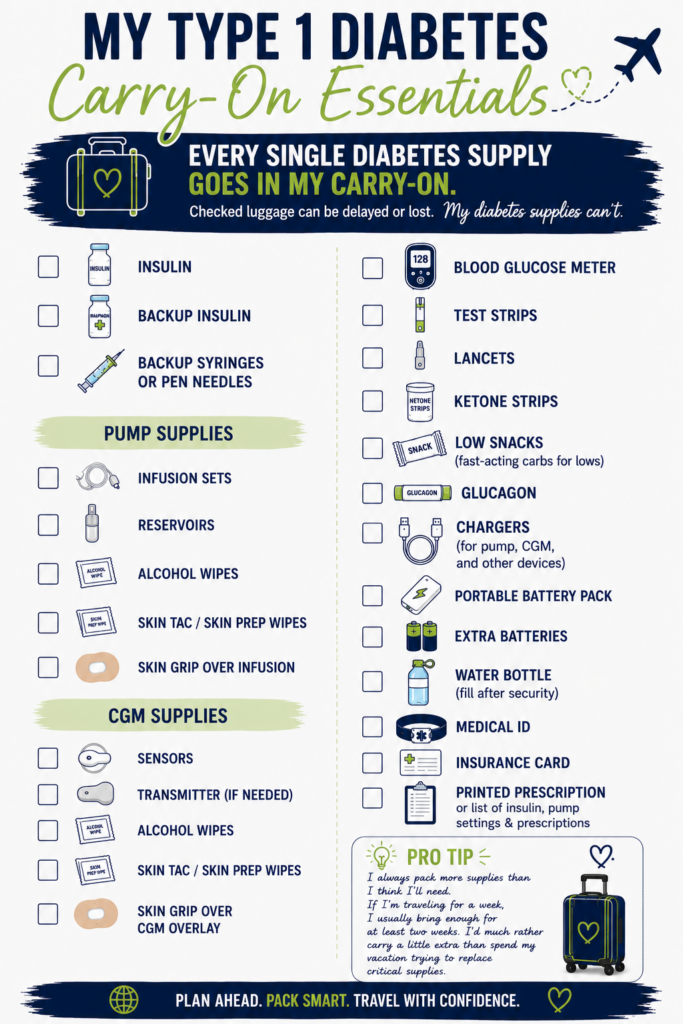
My Carry-On Essentials
Before I leave for the airport, I make sure my carry-on has:
- Insulin
- Backup insulin
- Backup syringes or pen needles
- Pump supplies
- CGM supplies
- Blood glucose meter
- Test strips
- Ketone strips
- Low snacks
- Glucagon
- Chargers
- Portable battery pack
- Water bottle (filled after security)
- Medical ID
- Insurance card
If I have those things with me, I know I can handle just about anything the travel day throws my way.
Don’t Let Diabetes Keep You Grounded
Type 1 diabetes has traveled with me on vacations, road trips, race weekends, and family adventures.
Has it required more planning?
Absolutely.
Has it stopped me from seeing new places and making incredible memories?
Not once.
The first flight with Type 1 diabetes might feel intimidating.
The second will feel easier.
By the tenth, you’ll be helping someone else who’s taking their first trip.
Because Type 1 diabetes may require an extra carry-on full of supplies…
But it never gets to decide where you go.