13 Lessons From 13 Marathons as a Type 1 Diabetic
I have run 13 marathons. I have a Boston qualifier, a DNF, a Disney poncho, and a pocket full of used CGM sensors to show for it. I have peed my pants chasing a BQ, cried at mile 5 of a race I couldn’t finish, and finished one of the most brutal Boston Marathons in decades in gear that cost $30 at the Magic Kingdom.
I also have Type 1 diabetes, which means every single one of those 26.2 miles came with a side of blood sugar math, gear decisions, and the particular kind of mental load that doesn’t show up in any training plan.
This post is for runners. It’s also for the T1D community. Because honestly, the lessons overlap more than you’d think.
1. Milwaukee Lakefront Marathon — You Can Do Hard Things
You always remember your first. The nervous excitement at the start line. The chill in the air. Standing there thinking — through all the training runs, all the highs, all the lows — I made it to the start.
That moment before the gun goes off at your first marathon is unlike anything else. You have no idea what’s coming. You just know you showed up.
I finished. And finishing felt enormous. That’s the whole lesson. You can do hard things. You don’t have to be fast. You don’t have to be graceful. You just have to get to the finish line.
I was managing T1D with fingerstick test strips at the time, which I was carrying in my pocket, which meant that with every stride I sounded like a tiny maraca. Somewhere out on the course a fellow runner pulled up next to me and said, “what are you carrying in there?” I told him test strips for my diabetes. He nodded very seriously and said he thought they were poker chips.
2. Grandma’s Marathon — Wait, You Actually Love This
After Milwaukee I thought, okay, I did the thing and I was hooked. Could I do this better? And then I signed up for another one. Grandma’s Marathon in Duluth, Minnesota is a point-to-point course that runs along Lake Superior, and somewhere out there I realized this wasn’t just something I was doing — it was something I actually loved. I also realized I might be able to get faster.
3. Green Bay Marathon — Sometimes the Chaos IS the Race
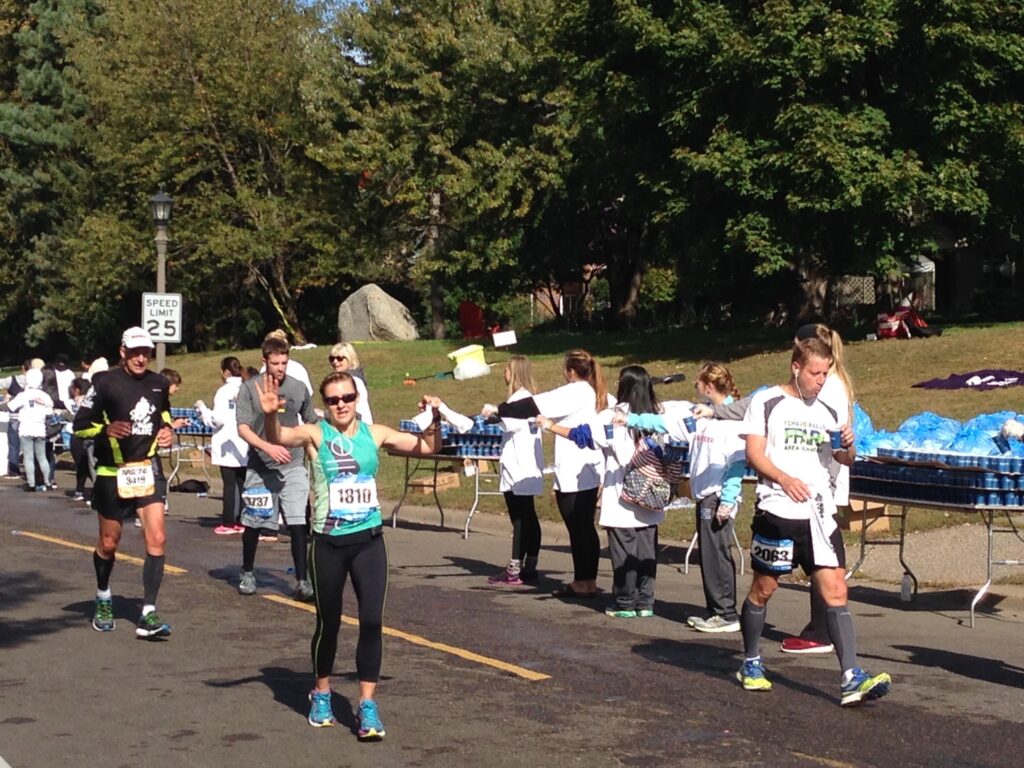
Two things happened at Green Bay that I think about more than almost any other race moment.
First: this was my first CGM marathon. I had upgraded from fingersticks to a continuous glucose monitor, which should have been a game changer. Instead, my sensor was so wildly off from the start that I eventually ripped it off mid-race and shoved it in my pocket. That’s the T1D version of “things didn’t go according to plan.”
Then came the heat, and the frustration that builds when nothing is going right and your body feels like it’s done negotiating. I stopped to talk to my family on the course. I was not in a great place mentally. My oldest looked at me and said: go finish.
Not a suggestion. A push.
So I slam dunked a gel into a trash can on the side of the course full send made the decision to finish, and did.
Lesson: sometimes you need the chaos to break before something else can. And sometimes the person who loves you most is the one who refuses to let you stop.
4. Chicago Marathon — Send It
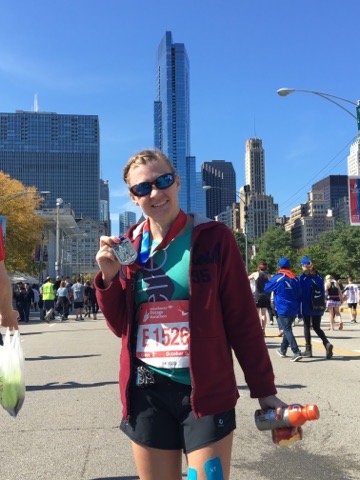
My first BQ attempt. Chicago is big and flat and fast, and I showed up ready to chase a qualifying time. I also experienced race cramps for the first time, which is its own kind of education.
The lesson here isn’t about whether I hit the time. It’s about the decision to try. You don’t BQ by not attempting it. You pick a goal, you build a plan, and you send it. That’s the whole thing.
5. Twin Cities Marathon — It’s Okay to Just Run
I needed this one after Green Bay and just missing in Chicago. I needed to remember why I was doing this.
What I didn’t expect was the backdrop. That year, Twin Cities came with real tension — there were credible threats targeting the race tied to the Black Lives Matter protests happening across the country. For the last three or four miles, there were barricades and police and SWAT lining the course. It was surreal and heavy and not what anyone signed up for.
And somewhere in the middle of all of that, I let go of every goal except one: enjoy the run. I did. I had so much fun. Sometimes that’s the whole point.
6. NYC Marathon — Walking Is Not Quitting
The New York City Marathon is a bucket list race and also deeply humbling.
By mile 19 my blood sugar was tanking dropping toward 70, which is not where you want to be with seven miles left in a marathon. I had eaten through every gel I was carrying. I was grabbing Gatorade at every single aid station and hoping it was enough to keep me moving. It was not a glamorous fueling strategy. It was survival math.
And then my knee one I had been nursing going into the race completely gave out. First major running injury, right there on one of the most iconic courses in the world. It has shown up periodically ever since to remind me that bodies keep score and respect is non-negotiable.
So I walked. Blood sugar managed, knee angry, ego somewhere back around mile 15. Walking is okay. Finishing is finishing.
7. Jack & Jill Downhill Marathon — I’m Going to Make It
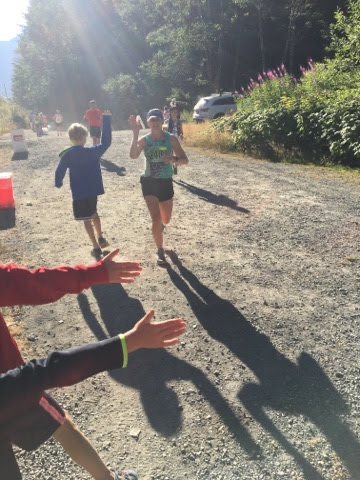
This is the one.
Jack & Jill is a point-to-point downhill course in Washington State, and I trained harder for this race than I had trained for anything. I used the Hansons Marathon Method, which is brutal and effective and taught me more about what my body could do and what it needed than any training cycle before it.
By this race I had fully made peace with my CGM. No backup test strips. I trusted it completely. That trust was built over months of training, of learning what my blood sugar did at mile 8, at mile 16, at mile 20. The T1D management that used to feel like chaos was starting to feel like data I knew how to use.
Then my calves started cramping at mile 1. Miles 1 through 3, I was cramping. I had traveled to bring my family to this race and I was already thinking about how to explain what was about to happen. I took a gel at mile 3. Things reset. I ran.
With five miles to go, I saw my family on the course. I grabbed my water bottle from my husband and yelled at them: I’m going to make it.
And I did.
8. Boston Marathon 2018 — You Are Tougher Than You Think
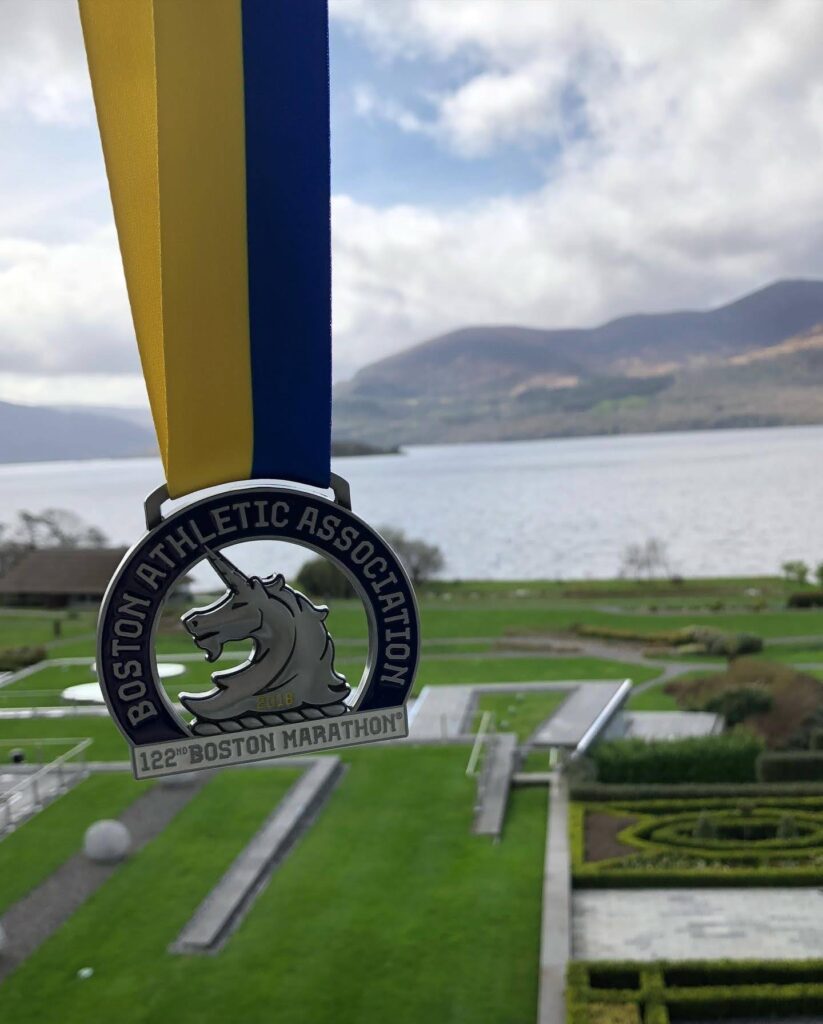
The 2018 Boston Marathon was the coldest race in 30 years. Temperatures in the 30s. Headwinds up to 30 miles per hour. Constant, drenching rain from start to finish. Over 2,500 runners needed medical treatment. Nearly 4,000 people didn’t finish double the dropout rate from the year before. Twenty-three elite runners dropped out, including Deena Kastor, Galen Rupp, and Desiree Linden, who went on to win the women’s race despite saying early on she was considering quitting.
I finished in a Disney poncho. The kind you buy at the parks when it rains and you’re in line for Space Mountain. It had a Mickey Mouse on the back. I bought it a few years earlier for maybe $30. Had I not had it, I would not have finished. I am certain of that.
The elites had the best gear money could buy and some of them still didn’t make it to the finish line. I had a plastic poncho from Disney World and I crossed it.
You are tougher than you think. Gear helps. But tough finishes the race.
9. Chicago Marathon (Again) — You Can Be Proud of a Race You Didn’t Win
I came back to Chicago for another BQ attempt. The qualifying standard had been adjusted, which made the margin tighter. I knew going in it would be a challenge.
I ran the entire race on the left side of the road, dodging and weaving through the field, hunting down every second I could find. I left absolutely nothing on the course. I peed my pants. I ran through it. I gave that race everything I had.
I missed the BQ by two minutes.
And I was still proud of myself. That surprised me a little. But I had run a gutsy, all-in race with no regrets, and there is something to be said for that even when the number on the clock isn’t the one you wanted.
10. Milwaukee Marathon — This Is Just What It Looks Like
I came back to Milwaukee for another local race. No grand goals this time just a home course, familiar roads, and the comfort of running a race close to home.
By this point I had been managing T1D through enough marathons to have opinions about gear. I was back on test strips for this one, which meant a pocket full of little plastic cases that rattled like poker chips with every stride. And when I opened them mid-race? Confetti cannon. Strips everywhere.
This is just what running with T1D looks like sometimes. It is not elegant. It is not seamless. It is poker chip percussion and accidental confetti and you finish anyway.
11. Grandma’s Marathon (Again) — Sometimes You Have to Walk Away
The DNF.
I wanted this race badly. Maybe too badly. I pushed when I should have listened, and at some point my body made the decision for me. I was sick. I was done. I was throwing up at mile 8 I walked away from the race.
There is a specific kind of grief in a DNF when you’ve worked hard for something and your body says no. It doesn’t feel like a lesson in the moment. It feels like failure.
But sometimes walking away is the right call. Sometimes pushing through isn’t brave it’s just damage. Knowing the difference is something you learn the hard way.
12. No Frills Marathon — Disappointment Is Information
I signed up for a small, low-key race thinking it would be a fun change of pace from the big events. What I did not fully anticipate was the gravel. Big gravel. The kind that changes your gait and chews up your legs in ways you don’t expect.
I ran-walked it. I finished. I was disappointed.
Disappointment is okay. It doesn’t mean you made a mistake signing up. It means you expected something different and got something else. File it away. Move on.
13. California International Marathon — Making Peace with the Day You Have
CIM is a fast course and I showed up with a pace group in mind. Then my legs told me something different — unusually heavy, unusually tired. By the time the pace group pulled away, I had a choice: chase them and blow up, or let them go and run my own race.
I let them go.
Around mile 21 I overheard a man on the side of the road on his phone. “I’m DONE,” he said. “Come get me.” He was calling someone to pick him up.
I thought: just walk it in, buddy. Mile 21 is so close.
But I also understood it. There are days when you’re done. There are days when the goal you came for isn’t available and you have to decide what you’re doing out there. That day, I decided to enjoy the run. I finished. It wasn’t the race I planned, but it was the race I had.
The Miles in Between — What Happened After CIM
CIM was 2022. I haven’t run a marathon since.
That’s not the ending I planned either.
After CIM, things started to unravel physically in ways that were harder to pin down than a bad race day. My soleus was a problem. My feet were cramping badly enough that on a hike in Arizona with my family, I could barely make it back to the car. That’s a specific kind of humbling when you’re a 13-time marathoner and a Boston qualifier and your foot cramps stop you on a hiking trail.
I went to PT. I worked on the soleus, the feet, the things that had been quietly accumulating while I kept running through them.
I also started HRT.
Here’s what nobody tells you clearly enough about perimenopause and running: your body changes in ways that don’t respond to the same training inputs they used to. Things that worked for years stop working. Recovery takes longer. Hormones that used to be background noise become a variable you can’t ignore. Managing T1D through a hormonal shift of that magnitude is its own entire education.
HRT helped. PT helped. Time helped. I took a real chunk of time off not a recovery week, actual time and let my body do whatever it needed to do.
Then one day I went out for a run with no expectations. Just a let’s-see run. And things were okay.
So I signed up for the Every Women’s Marathon in 2027. It feels exactly right for where I am in this chapter of my life.
That’s the thing about this sport and this body and this disease the story doesn’t end where you think it’s going to end. I have been a poker-chip-rattling first-timer who couldn’t open a test strip without launching confetti. I have ripped a CGM sensor off my arm mid-race and shoved it in my pocket. I have trusted that same technology completely enough to BQ with it. I have walked when I needed to walk, stopped when I needed to stop, and finished when everything in me wanted to quit.
And now I have a start line again.
The diabetes is still part of it. The hormones are still part of it. The PT exercises are still part of it. All of it is part of it.
Diabetes is part of your story. Not your whole story.
Neither is any single race — the ones that went perfectly or the ones that fell apart or the ones where you peed your pants chasing a qualifying time and missed it by two minutes and were proud of yourself anyway.
Number 14 is on the calendar. The story keeps going. So do I.