Your Pancreas Didn’t See an Omelet and File for Divorce
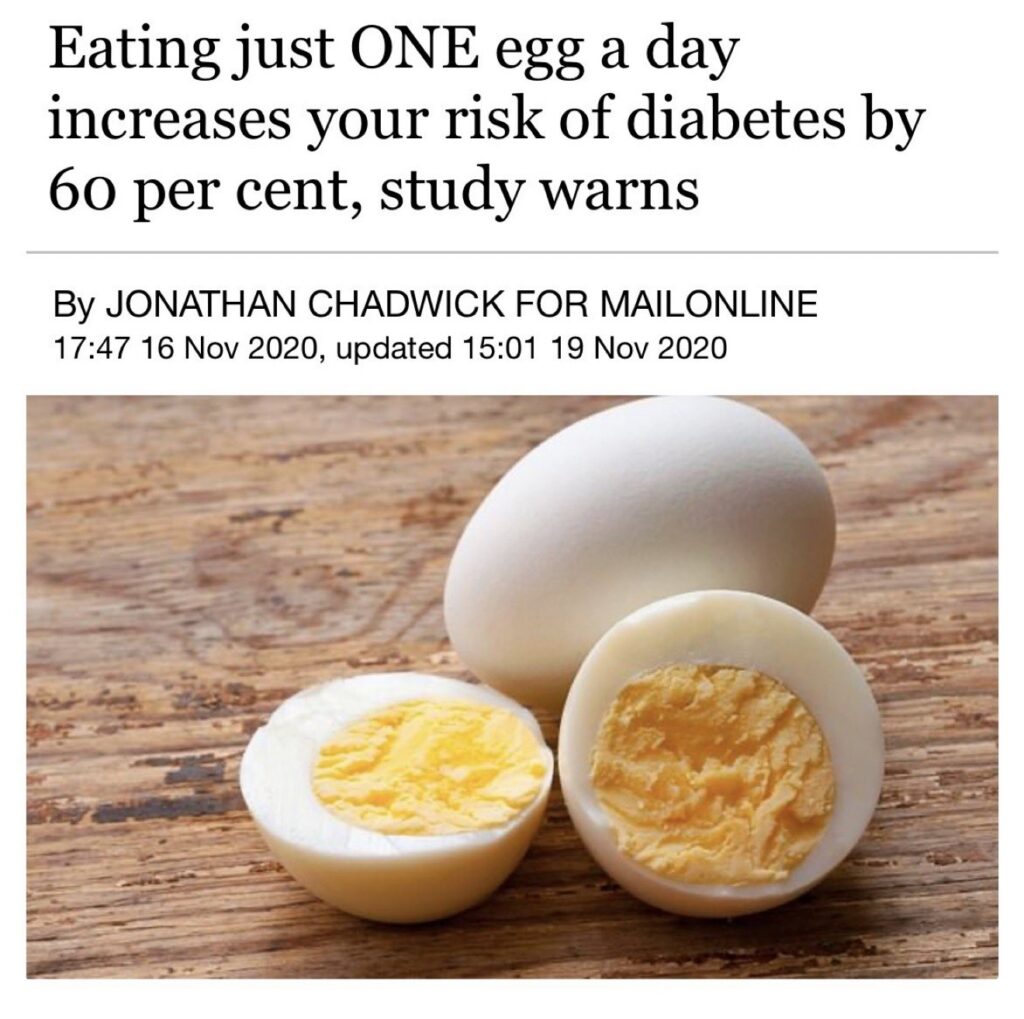
The truth behind the viral headline claiming one egg a day increases your diabetes risk by 60%.
I was scrolling Facebook the other day when I nearly spit out my coffee.
“Eating just ONE egg a day increases your risk of diabetes by 60%.”
What in the actual hell?
If you’ve spent more than five minutes on social media, you’ve probably noticed this pattern. Every few months the internet puts another food on trial.
Coffee will kill you.
Then coffee will save your life.
Butter is poison.
Actually, butter is healthy again.
Bananas have too much sugar.
Oatmeal is inflammatory.
Now…apparently eggs are causing diabetes.
As someone who’s lived with Type 1 diabetes for over 20 years, these headlines make me crazy—not because they’re always completely false, but because they’re designed to scare you instead of inform you.
So I went looking for the actual study.
Here’s what it really says.
First Things First…
Your pancreas didn’t see an omelet and file for divorce.
If you’re living with Type 1 diabetes, breakfast didn’t cause it.
Eggs didn’t cause it.
Sugar didn’t cause it.
Your immune system mistakenly attacked the insulin-producing beta cells in your pancreas. That’s what Type 1 diabetes is.
This viral headline isn’t even talking about Type 1 diabetes.
It’s talking about Type 2 diabetes, which is an entirely different disease with different causes, risk factors, and treatments.
Unfortunately, headlines rarely bother explaining that.
Where Did the “60%” Number Come From?
The number comes from a 2020 observational study that followed more than 8,500 adults in China over several years.
Researchers noticed that people who reported eating more eggs were also more likely to develop Type 2 diabetes.
Notice the wording.
More likely.
Not…
Eggs caused diabetes.
That’s an enormous difference.
Here’s How the Headline Tricks You
This is where clickbait earns its paycheck.
“Increases your risk by 60%.”
Sounds terrifying.
But that’s relative risk, not absolute risk.
Imagine 10 out of 1,000 people develop a condition.
A 60% increase would mean about 16 out of 1,000—not 600.
Headlines almost never explain this because “60% higher risk” sounds much scarier than “six additional people per thousand.”
“One egg a day…”
Also misleading.
The study wasn’t a laboratory experiment where researchers fed one group eggs and another group no eggs.
Participants simply reported what they usually ate.
Researchers then looked for patterns years later.
That’s called an observational study.
Observational studies are great for generating questions.
They cannot prove cause and effect.
Correlation Isn’t Causation
Here’s an example.
People who carry umbrellas are more likely to get wet.
Did the umbrella make them wet?
Of course not.
Rain explains both.
Nutrition research works the same way.
People who ate more eggs in this study may also have differed in dozens of other ways:
- Body weight
- Exercise habits
- Smoking
- Alcohol use
- Income
- Sleep
- Overall dietary quality
- Processed food intake
You can’t isolate the egg from the rest of someone’s life.
What Does the Bigger Picture Say?
This is the part that rarely becomes a viral Facebook post.
When researchers combine data from many studies instead of focusing on just one, the results look very different.
Multiple reviews have found that moderate egg consumption is not consistently associated with a higher risk of Type 2 diabetes.
For most healthy adults, eating an egg a day fits comfortably into a healthy dietary pattern.
Eggs also provide:
- High-quality protein
- Choline for brain health
- Vitamin B12
- Selenium
- Vitamin D
- Healthy fats
That’s why nutrition experts don’t tell everyone to stop eating eggs.
Because the total body of evidence matters far more than one attention-grabbing headline.
Nutrition Doesn’t Happen One Food at a Time
Let’s compare two breakfasts.
Breakfast A
- Two eggs
- Whole-grain toast
- Fruit
- Greek yogurt
Breakfast B
- Giant cinnamon roll
- Sugary coffee drink
- No protein
Which breakfast would most dietitians recommend?
The one with eggs.
Because nutrition isn’t about demonizing individual foods.
It’s about your overall eating pattern over months and years.
Why Rage-Bait Headlines Work
Fear gets clicks.
Nuance doesn’t.
“Eggs can be part of a healthy diet.”
Nobody shares that.
“Eggs increase diabetes risk by 60%!”
Now you’ve got millions of views, thousands of comments, and people arguing with strangers on Facebook.
Mission accomplished.
Unfortunately, most people never read beyond the headline.
How to Spot Health Clickbait
The next time a scary nutrition headline pops up, ask yourself these four questions:
✅ Was this one study or many?
✅ Was it observational or experimental?
✅ Does the headline say “linked to” or does it imply causation?
✅ What does the total body of scientific evidence say?
If the article doesn’t answer those questions…
It’s probably selling clicks, not science.
The Bottom Line
Can eggs be part of a healthy diet?
Absolutely.
Should you panic because of one viral headline?
Absolutely not.
Nutrition is complicated. Social media isn’t.
The next time someone tells you breakfast caused diabetes, remember this:
Your pancreas didn’t see an omelet and file for divorce.
And maybe don’t take nutrition advice from a headline that’s trying harder to go viral than tell the truth.